

Restaurants & commercial kitchens
Fryer exhaust deposits animal fat across the roof downwind of the hood. PVC is the only common membrane formulated to resist it without degrading.
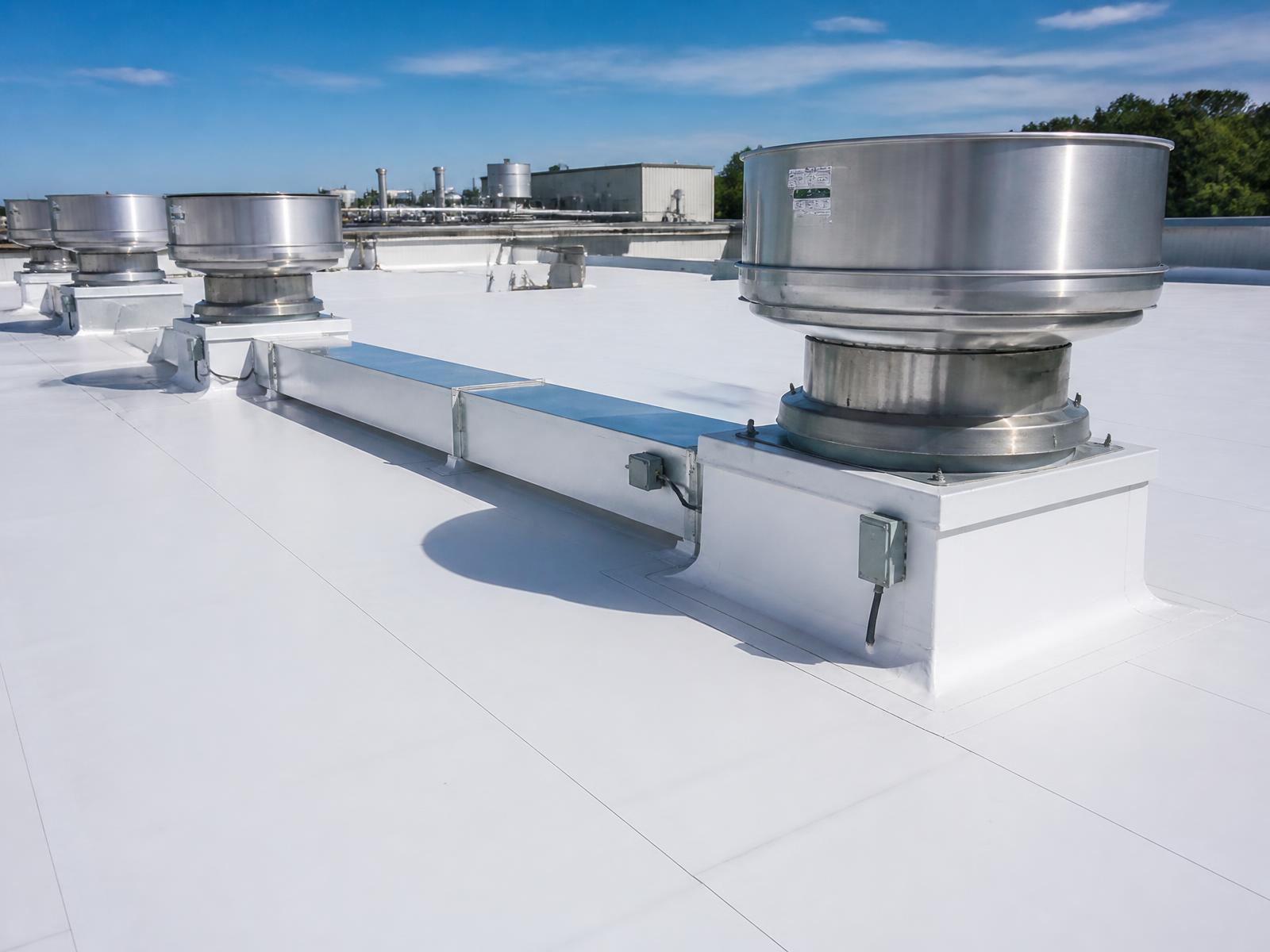
PVC Membrane
When kitchen exhaust, process chemicals or oils hit the roof, PVC is the specification. Chemically welded seams, Class A fire rating and a plasticizer package built to resist what would break down other membranes.
Who needs PVC
Fryer exhaust deposits animal fat across the roof downwind of the hood. PVC is the only common membrane formulated to resist it without degrading.
Continuous grease-laden exhaust, wash-down chemistry and heavy service traffic across a roof that cannot be shut down.
Process exhaust with solvents, acids and oils. We match the membrane's chemical compatibility chart to your actual stack list.
Jet fuel and hydraulic exposure with strict Class A fire requirements over occupied terminal space.
Performance
Animal fats and petroleum oils leach plasticizers out of unsuitable membranes. The sheet stiffens, shrinks, and cracks radiate outward from the exhaust fan — usually within a few years of an otherwise sound installation.
PVC is formulated with a plasticizer package and often a fleece backing that resists that attack. We still detail a grease containment pan and a walkway route at every hood so maintenance traffic never grinds residue into the sheet.
If a previous contractor put a non-resistant membrane downwind of your fryer exhaust, we'll document it with photos for your warranty claim.
Hot-air welded laps fuse into a single sheet, probe-tested across the full roof with destructive coupons pulled daily.
Rated assemblies over combustible and non-combustible decks, documented for your insurer and local code official.
RoofingCat AI Assistant
We'll audit the roof, identify the membrane you actually have, and quote the chemically correct replacement.