

Roof Repair
Find the real source, then fix it
Most leaks are a detail failure, not a worn-out roof. We diagnose before we quote — and we'll tell you when a repair is the smarter money.
Diagnostic
Repair or replace? Four taps.
Repair vs. replace diagnostic
Four taps for a straight answer
1. How old is the roof?
2. What's the main symptom?
3. Is water reaching the attic or drywall?
4. Has it been repaired before?
0 of 4 answered — your risk score appears as soon as all four are tapped.
Diagnosis
Leak diagnosis
Water rarely enters where the stain appears. It travels along rafters and sheathing before it drops. We start in the attic, trace the path back uphill, then confirm on the roof — checking pipe boots, nail pops, step flashing, valleys and wall transitions.
While you wait: move belongings clear, put a container under the drip, and if the ceiling is bulging, pierce it in one spot to let water out in a controlled way. Please stay off the roof — wet or damaged roofs are genuinely dangerous.
Details
Skylight repair & replacement
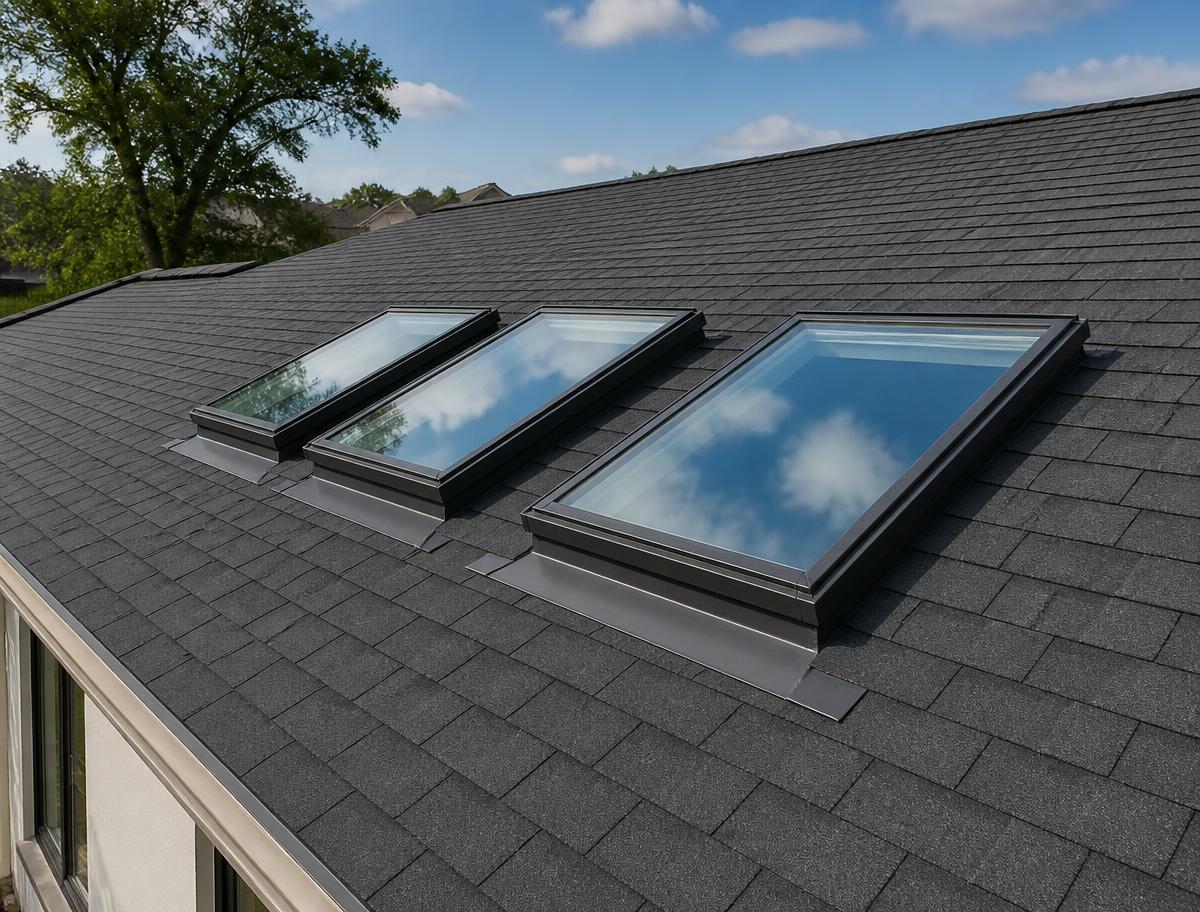
Older curb-mounted skylights usually leak at the flashing or at a failed seal, and repeated caulking only buys a season. If the unit is more than about twenty years old and the roof is being replaced, replacing it with a modern deck-mounted unit and its factory flashing kit is the lasting fix.
Fogging between the panes means the seal has failed — that's a glass problem, not a roof leak, and it's replaced rather than repaired.
Details
Chimney flashing
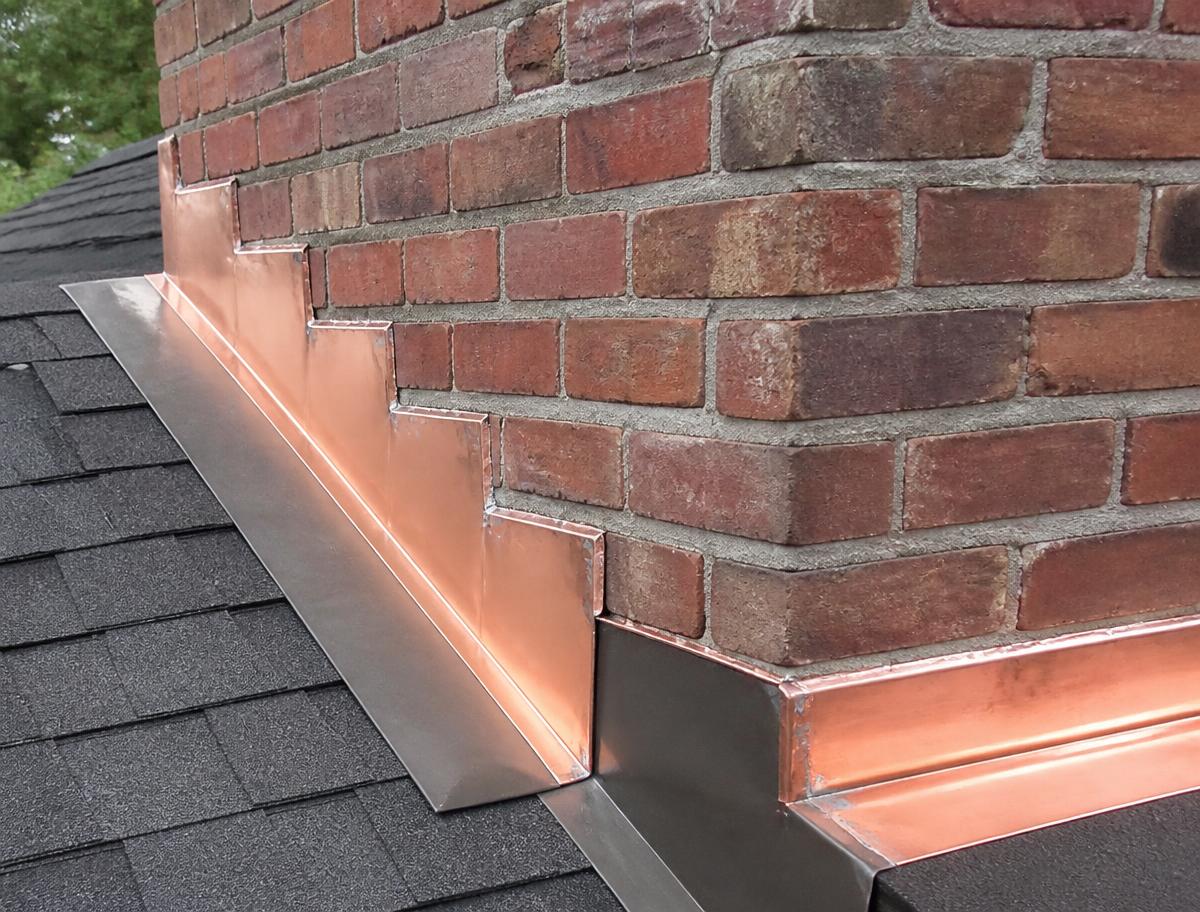
A chimney needs two layers of metal: step flashing woven into each shingle course, and counter-flashing cut into the masonry above it. Tar smeared over a gap is a patch, not flashing — it cracks within a couple of seasons and the leak returns.
We rebuild the assembly in copper or coated steel, cut a proper reglet, and seal it so the joint moves with the house instead of tearing.
Details
Valleys & vents
Valleys carry the most water on the roof, so they wear first — especially woven valleys on steep pitches. We rebuild them open with metal where volume is high.
Pipe boots are the other common culprit: the rubber collar dries and splits in roughly ten to fifteen years. It's a small, inexpensive repair that prevents an expensive ceiling.
Seeing a stain on the ceiling?
Book a free inspection. We'll trace the source, photograph it, and give you a repair scope before anything gets torn apart.